

Patent Drafting Strategies – What to follow and What to avoid?
Patent drafting has been one of the most crucial exercises for any IP professional to understand and develop skills around. Quality patent application ensures client’s invention boundaries are well protected and infringement levels are low. There are numerous guidelines that advise on steps to be followed while writing a professional patent application draft but they radically change from technology perspective and maintaining invention boundaries. There are many rulebooks but entrusting one of them over the other might not be a good idea. Patents are written and prosecuted manually, hence the patent office perspective sometimes does not align with the attorney’s viewpoint. Hence, we receive office actions. Although we can lay out rules for various sections of the patent application, it is evident that a patent practitioner shall understand and develop skill-sets pertaining to the technology area and write applications accordingly. Some of the key points include: Writing quality claims with special attention to independents – It is the most crucial part of the overall patent application and needs to be strategized concerning 35 U.S.C 101, 102, and 103. Hence, the invention shall be classified within a process, system, article of manufacture, and composition of matter. Secondly, the invention needs to overcome novelty and obvious parameters to avoid rejections. Enabling claims property– This is an essential portion of the specification part and requires all claims (Independent and Dependent) to be explained through one or more essential embodiments. This makes your invention more clear during the examination procedure and helps in the prosecution stage. However, it is recommended that one should also explain alternative embodiments along with the essential ones to cover defensive publication as well Enabling Embodiments with Figures – A mandatory and not unconventional way is to explain through figures and flow diagrams each embodiment in the description is quite essential while writing the detailed specification. It is to be understood that each embodiment shall be explained in order, along with non-enabled alternatives as well. This helps to visualize the invention with variation in scope and avoids infringement on your patent-based products or services by your competitors. Full-filling Best Mode Requirement-Conventional but a good approach is to explain the best mode in which your invention would work. This exclusively enables the parameter where your invention was conceived. Overcoming 37 CFR Rejection – This section is totally based on the supporting figures being made compliant with the patent office rules and labeling appropriate elements of the figures in the description section. Non-labeled or uncovered labeled sections both correspond to 37 CFR-based rejections. It is recommended to consider and adapt any PTO based ruling on a technology area and develop claim strategy accordingly. Sometimes, one shall consider standard essential patent (SEP) based infringement as well apart from prior art(s) identified and considered while writing the claim section. Some claim writing tricks that shall be helpful include: Developing system/method-based diagrams to depict and categorize essential elements/steps from the non-essential. Focus and elaborate more on essential elements/steps. Understand to draft patent applications driven towards system or method oriented based on prior arts and basic SEP analysis. Develop a chain of dependent claims strategically, i.e. Independent-dependent, dependent-dependent accordingly. Try not to be repetitive in claims, i.e. avoid repeating system dependents in method independent and vice-versa. Follow and consider ruling-based guidelines (eg: Alice ruling in software etc.) to improvise on claim language and avoid rejections. Try to write a claim in a way that it is written more on a global standard for considering multiple country-based patent filings.

Patent Landscape Search
Patent landscape search has been a conventional yet a smart approach to enter or understand the patent market within one or more jurisdictions. It is often used synonymously with patent FTO search as well. However, both of these searches are related amongst themselves. From a conventional standpoint, a patent landscape study allows us to understand a broader technology with finer details through graphs, charts and state-of-the-art based automation techniques. It helps us visualize a patent marketplace, strengths, weaknesses of some classified or upcoming technologies over the other. Companies who need to enter or invest in technologies in one or more countries do require effective patent landscape study during their decision making, so that they can develop different strategies including licensing, portfolio creation, transactions etc. However, the utility of patent landscape is multi-faceted as it is conducted on a generalized technology with thousands of patents being considered. The outcome of the analysis can be shown via 3-D, 4-D charts including, but not limited to – Sunburst, Heat Maps, Bubble Chart, Waterfall etc. for data visualization. Sometimes, it is preferable to show the analysis using an external dashboard with customized content. There are many approaches to conduct an effective patent landscape. However, it is recommended to understand the technology targeted in detail, so that the relevant patent data-set gathered from multiple sources is correct and up to date. Once this is performed correctly, one approach to refine the data-set is: Classification of the data-set into sub-technologies, followed by breaking them further till there is no further technology classification left. A general rule is to reach 5% of the overall size of the patent data-set till one should stops technology classification of the patent data-set. Generating Sunbursts and heat maps of the technical classifications performed on patent data-sets. Expansion of the patent data-set into extended families to uncover all geographies where the patents have been filed. Charting regions wise graphs including filing trends, geographical distribution, legal activities, dominant players, dominant inventors and their combinations. Generating bubble charts relating to classes where most of the patent data-set has been classified to understand white spaces and strength of the patent data-set. In addition to the above, it is always recommended to integrate state-of -the–art dashboard tools with the patent data-set to uncover and customize hidden insights or upcoming technologies within the general technology. Hence, the patent data-set and its correctness is of foremost importance to conduct a patent landscape in a correct manner. Otherwise, all the follow-up analysis becomes useless and skips essential key points to be deduced from the source data. There are many automated and artificial intelligence based tools that allow quickly extracting patent data on a certain technology and generating analytic charts based on the patent data. However, they lack essential ingredients, i.e. manual classification of the patent data. Since the manual extraction, followed by classification of the patent data is incomplete, the upcoming trends (for example, new patent applications published) are skipped by these automated tools. The best approach is to manually extract and filter the patent data-set, followed by integration with these artificial intelligence and dashboard tools. In this way, we generate highly efficient and knowledgeable analysis that helps in achieving decision making while entering a particular technology or licensing with owners of the patent in one or more jurisdictions.
Patent Illustrations: Best Practises
Illustrations commonly referred to as drawings form an integral part of intellectual property. They contribute immensely in expressing different types of intellectual property, ranging from Patents, Trademark, and industrial designs to many more. Each of these intellectual properties is supported by illustrations and is admissible with certain rules governed by the patent office. Illustrations form the most important part in the patent process, whether it is a utility patent, a design patent or a plant patent. Each type of patent requires certain rules and instructions to be followed before submission of the patent application with the PTO. Otherwise, many rejections which directly contribute to the escalation in the patent prosecution cost are faced by the attorney. Sometimes it results in delay in granting the patent, especially design patents. Most of these rejections are based on non-enablement of certain embodiment’s claims or described in the patent application. Some of the rules that are to be recommended to be followed include – https://www.uspto.gov/web/offices/pac/mpep/s1606.html Each patent office does follow their own rulebook and rejection criteria while initiating an office action. However, if the patent applications follow these procedures strictly, the inventor’s cost of prosecution and piling up of pending patent applications can significantly reduce. Other intellectual properties, including Trademark, Trade Dress, and Industrial Design do follow the same path and if followed correctly, can improve intellectual property prosecution process. There have been state-of-the-art software that are now available to reduce illustration cost, as they allow attorneys and inventors to develop quality and compliant illustrations without significant time and effort. Some of this technical software does allow 3-D (AUTOCAD) based drawings to be used to generate corresponding compliant views submissive as per the patent office guidelines. However, it is not advisable to use the software in every technological area the invention pertains to. There are many best practices that the illustrator (or a designer) must keep in mind while developing the illustrations on a software platform. Some of them include: Acceptance of different formats source drawings Tools supporting multiple technological areas Easy format conversion of the source and deliverable file(s) Allows altering the source file based on different patent office requirements It is advisable to use MS Visio software as it is compatible with most of the above points and many attorneys prefer to use this software in-house.

Patent Trends in COVID-19 Pandemic
This set of reports tracks patent trends in COVID-19 Pandemic through the analysis of patent and other data to provide solid, factual evidence on patent filings. We operate with IP offices from around the world to provide latest global IP data. We also publish statistical reports on worldwide IP activity and trends.

Effective Patent Search
A Patent Search is conducted to evaluate the multiple objectives. Sometimes it is used to check the novelty of an invention and sometimes to kill the invention. In addition, the patent search is more commonly phrased as a prior art search. It helps to determine whether the invention is new, patentable and non-obvious. In simple terms, a Patent Search is done to ensure that your invention is novel and not already known. Effective patent search allows the inventor or assignee to ensure all subsequent steps and decision making like patent application filing is performed correctly. Sometimes, it really helps in enhancing your idea as well. Hence, an effective patent search is pretty much a strong need of inventors, patent agents, patent attorneys to prepare and submit their idea with the patent office. Sometimes, a patent search is done to understand effective and enforceable patents present in one or more jurisdictions to ensure non-infringement issues. This helps in avoiding litigation and creating marketing strategies for fortune 500+ companies. Therefore, an effective patent search is multi-faceted and requires an intelligent approach to ensure multiple objectives are achieved. Some of the key pointers for beginner is to understand where and how to conduct an effective patent search: 1. Choose the right set of keywords pertaining to the invention. 2. Choose the right set of database(s) to conduct the search 3. Choose the right set of combinations of Keywords and classes There are many patent record vendors in the market that provide search platforms to conduct the patent search. However, choosing right one out of it depends upon multiple factors including – Worldwide patent document coverage, frequency of update, representation of information, search interface parameters, options to perform all strategies on a single platform etc. However, it is recommended that the preferred domestic PTO shall be searched before filing the patent in the respective patent office. The reason for this is multiple. One, it allows easy prosecution at the later stage. Two, records of patent filing are up to date. Three, language barriers associated with patent offices in countries like Japan, Korea, China etc. and some European countries like Germany, France etc., are overcome. Hence, a strong patent search approach while filing in native country shall be preferred. A patent searcher shall review the invention carefully, understand the technology area and appropriately use keywords in the broadest level possible to uncover all patents relating to the invention for further review. Moreover, in order to avoid too much time and effort, a narrow search is recommended over a broader one. Sometimes, it is also preferred to include classification aspect to the search rather than using too many keywords, especially in the invention relating to mechanical technologies, medical devices etc. Patent Tools PatentManiac deploys various search tools (softwares, macros, dashboards etc.) to achieve optimization and comprehensiveness of the work product development during the project execution stage. Various Patent Tools Include: Patent Research Tools External Patent Databases Domestic Patent Databases Chemical Patent Databases Patent Analytic Tools Patent Paralegal Tools
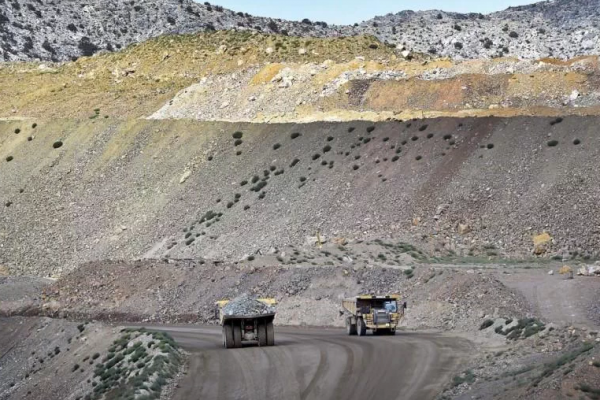
China’s war chest of rare earth patents give an insight into total domination of the industry
China is strengthening its grip on the rare earths supply chain and could use its dominant position as a bargaining chip in its trade war with the US. China has been investing heavily in facilities to do the bulk of the dirty and environmentally damaging mining and ore processing work for the world, systematically turning its know-how and methodologies into patents that could give it a competitive edge against its rivals. The country, which already supplies more than 80 percent of the world’s rare earth metals, is rapidly amassing patents related to the elements, says James Kennedy, president of St Louis, Missouri, based ThREE Consulting, who last year initiated a global patent search to back up his lobbying effort to the US government. As of October, China had filed for 25,911 patents on all the rare earth elements, far ahead of 9,810 by the US, 13,920 by Japan, and 7,280 by the European Union since 1950 when the first US filing was made, based on data from Kennedy’s research supplier PatentManiac. Read complete article at Yahoo News.