
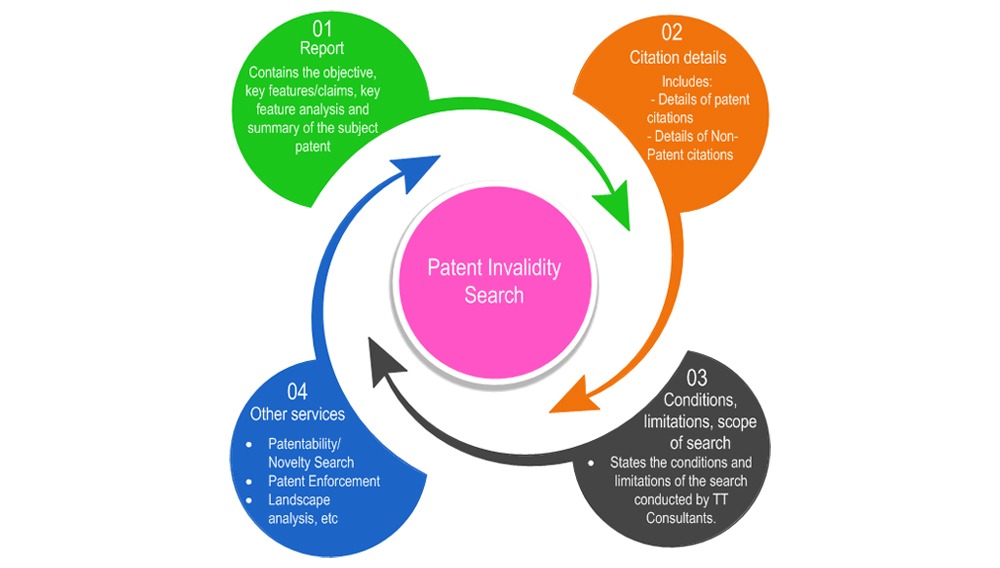
Most companies invest heavily in patent filing and portfolio building — but when a legal or licensing dispute arises, they often overlook one of the most powerful defensive tools in IP strategy: You don’t always need to fight back with a new patent — sometimes, you win by proving the other side’s patent shouldn’t exist. That’s where Patent Invalidity Searches (also called Opposition / Revocation Studies) come in. One Prior Art Reference Can Change the Entire Case A classic example comes from the Apple vs. Samsung smartphone battle. Apple accused Samsung of infringing its “bounce-back” UI patent and demanded huge damages.Samsung’s legal team uncovered an older Japanese patent showing similar functionality. Result: Apple’s core patent claims were invalidated — instantly weakening their leverage. A single piece of prior art shifted the balance of power. When Do Companies Use Invalidity Searches? Below is an illustration of typical usage distribution in real-world scenarios: Litigation Defense – 50% Pre-Licensing / Royalty Negotiations – 30% M&A / Technology Acquisition Due Diligence – 15% Competitive Strategy / Portfolio Monitoring – 5% This visual demonstrates how invalidity searches are most frequently used to defend against litigation and reduce exposure, but they also play a critical role in licensing and strategic acquisitions. 5-Step Framework for a Strong Invalidity Strategy Break down patent claims carefully — don’t rely solely on the abstract. Search beyond patent databases — include theses, standards documents, manuals, conference papers. Examine older or obscure jurisdictions — Japan, Korea, Russia, WIPO documents often reveal overlooked prior art. Map each claim element to prior art — build a clear visual comparison. Align findings with legal invalidation grounds — focus on novelty and obviousness. Why It’s Called a “Silent Weapon” Most disputes do not even reach court once solid prior art is presented.Conversations shift, royalty demands soften, and settlements become favorable. It is not aggression — it is strategic disarmament. Final Thought If your IP strategy focuses only on filing patents but ignores invalidation as an offensive-defense tool, you are fighting with half your arsenal. Whether you’re a startup facing licensing threats, a corporation defending litigation, or a law firm advising clients — an invalidity search could be the difference between paying millions or walking free. If you’d like to explore real-world invalidity strategies or see a sample claim mapping, let’s connect.
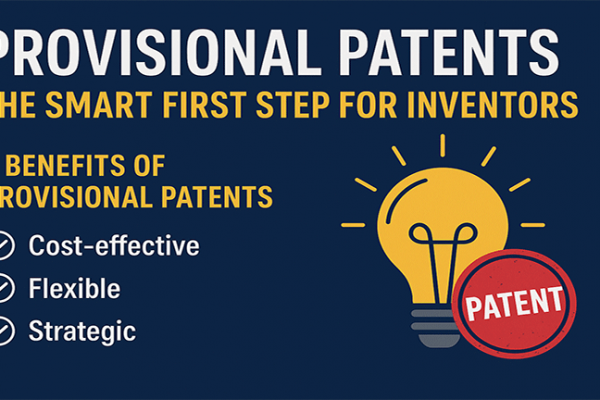
Provisional Patents: The Smart First Step for Inventors
Every great invention starts with an idea. But in today’s fast-moving world, the real challenge is protecting that idea before someone else brings it to life. That’s where a Provisional Patent Application (PPA) comes in — a simple, affordable, and strategic first step for inventors. What is a Provisional Patent? A provisional patent is essentially a placeholder filed with the U.S. Patent and Trademark Office (USPTO). It doesn’t give you a granted patent, but it does: Secure an official filing date (your “priority date”). Allow you to use the term “Patent Pending” for 12 months. Give you time to refine your invention, attract investors, or test the market before committing to a full patent. Why It’s a Smart Move Cost-Effective – Filing fees start as low as $60 for micro-entities. Flexible – You can update your invention and file multiple PPAs before submitting a full non-provisional patent. Strategic – Investors and partners take “Patent Pending” seriously, making it easier to gain credibility. Common Misconceptions “It guarantees a patent.” → Not true. You must still file a non-provisional within 12 months. “A vague description is enough.” → No. Your PPA must describe your invention clearly so others could replicate it. Final Thought Think of a provisional patent as a safety net for your innovation journey. It buys you time, protects your priority, and signals to the world that your idea is worth something. For any inventor — especially startups and individual innovators — it’s the smartest first step toward turning an idea into a protected innovation.

Emerging Patent Trends in 2025: How Corporations Should Adapt Their #IPStrategies
The world of #intellectualproperty is evolving rapidly, and 2025 brings both new challenges and unprecedented opportunities for corporations committed to #innovation. Trends such as #artificialintelligence, digital health, sustainable technologies, and global competition are reshaping how businesses protect their ideas and capitalize on their R&D investments. Shifting Landscapes: What’s Changing in Patent Strategy? With technologies advancing at breakneck speed, traditional approaches to patenting may no longer suffice. AI-driven inventions, complex digital platforms, and Industry 4.0 smart manufacturing require new filing strategies and careful attention to global IP rules. Companies in renewable energy, healthcare, and connected devices must now navigate stricter patentability criteria and changing international enforcement standards to truly safeguard and monetize their innovations. AI, Sustainability, and Globalization: The Big Patent Drivers AI is at the heart of the current innovation race, and countries like China, the US, and India are leading in AI patent filings. The growth in green tech IP reflects a worldwide focus on climate change and sustainability, with patents driving competition in solar, battery, and carbon solutions. Additionally, digital healthcare and telemedicine are raising new questions about patenting data use and ensuring system interoperability. Why Companies Must Rethink Their IP Approach Competitive Edge: Companies with proactive, globally aligned IP strategies are best positioned to attract investors and secure partnerships. Value Creation: A robust patent portfolio isn’t just defensive; it’s an asset that can drive licensing, commercial deals, and sustained growth. Regulatory Readiness: Understanding and planning for new IP regulations and digital risks is vital to prevent costly litigation or lost rights. Taking Action: What Should Corporations Do? Review and refresh your #patentportfolio regularly for relevance and global coverage. Collaborate with experienced IP partners who understand emerging tech and worldwide compliance. Consider #patentanalytics to identify innovation gaps, competitor moves, and business opportunities. Support in-house R&D teams with patent education and strategy workshops to align innovation with business objectives. Engage in IP audits and future-proof your protection by anticipating regulatory and technology shifts. Ready to Innovate with Confidence? Navigating the changing world of patents requires expertise, insight, and agility. At PatentManiac, our team helps corporations unlock the potential of their intellectual property with tailored patent filing, analytics, and strategy solutions. Discover how PatentManiac.com can elevate your IP strategy and maximize innovation value. #Patents #Innovation #IntellectualProperty #IPStrategy #AI #GreenTech #DigitalHealth #CorporateInnovation #IP2025 #PatentFiling #IPServices